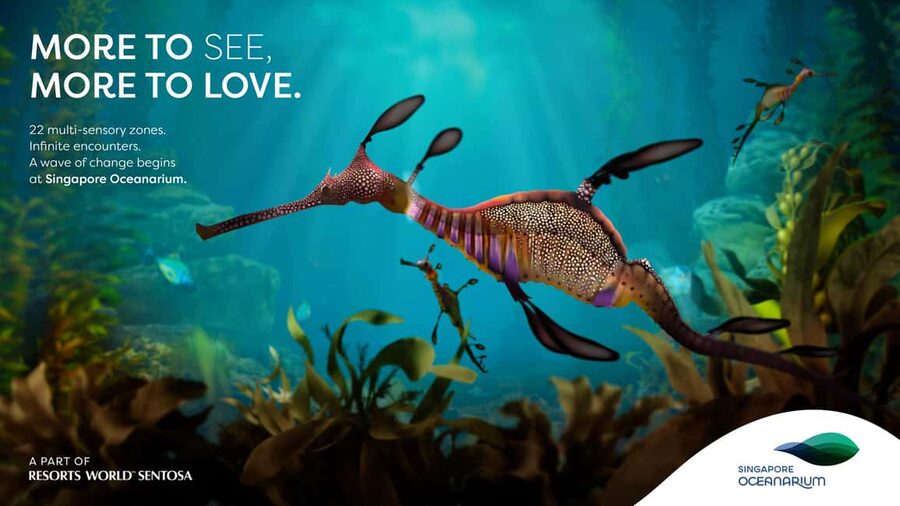
Review · TOURS IN SINGAPORE
Singapore: Singapore Oceanarium Entrance Ticket
The 5,000-plus moon jellyfish in one of the world’s largest kreisel tanks make a striking start to a visit built around the ocean’s variety, from mangrove habitats to the deep sea. At the other end of the scale, a 36-metre-wide panel puts reef manta rays and zebra sharks in view.
I like the hands-on mangrove displays, which make the habitat more than something to look at, and the whale-fall exhibit, which shows how a dead whale can sustain an ecosystem. One consideration: the $43 ticket is non-refundable, and the Oceanarium is closed to the public on 13 June 2026.
Key things to know
- Moon jellyfish fill a vast kreisel tank: More than 5,000 jellyfish make this a major visual stop.
- The mangrove display invites interaction: Touch-friendly biodiversity displays offer a change from looking through glass.
- Marine evolution gets a life-sized treatment: Animatronics and fossils connect ocean life with the move onto land.
- A whale fall supports a deep-sea exhibit: The display focuses on the communities that use a whale’s remains as a source of food and habitat.
- A 36-metre panel frames larger marine life: Look for reef manta rays and zebra sharks.
Begin with the scale of the jellyfish tank
Singapore Oceanarium sits at Resorts World Sentosa and presents itself as both an aquarium and an ocean institute. Its exhibits mix live habitats, digital technology and interactive displays, with a stated mission to advance marine education, research and conservation.
The moon jellyfish tank gives you a clear sense of the place’s appeal. More than 5,000 of these animals move through one of the world’s largest kreisel tanks, a design made for keeping delicate, free-floating creatures in motion. The scale is the draw, but so is the simple change of pace: you can stop and watch rather than hurry from one object to the next.
A visit is self-guided. There is no guide name or tour group information provided, so plan to explore at your own speed and use the exhibits themselves to set the rhythm. That suits visitors who like lingering, though anyone hoping for a hosted tour or a fixed sequence should know that neither is specified.
One visitor’s visit took about two and a half hours. That is a useful planning reference, not a guaranteed duration. The ticket is valid for one day, which gives you flexibility to take your time during regular opening hours, but the exact hours may change without notice.
A few more Singapore tours around Singapore worth a look
- Singapore: Gardens by the Bay Bundle Entry Ticket
★ 4.3 · 3,726 reviews - Singapore: Singapore Flyer Entry Ticket
★ 4.7 · 907 reviews - Singapore: Sentosa Wings of Time Fireworks Symphony Ticket
★ 4.3 · 321 reviews
Look closely at the mangrove habitat
The interactive mangrove habitat gives the visit a more tactile stop. Its touch-friendly biodiversity displays are intended to bring attention to the life found in this coastal environment, rather than treating mangroves as just a scenic backdrop.
I like this kind of exhibit because it helps you connect a habitat to the creatures and ecological roles within it. It can also make the visit more engaging for children and for anyone who learns better by doing than by reading. The supplied details do not specify exactly what you can touch, so follow the posted instructions and do not assume every animal or display is hands-on.
The mangrove section also gives the visit a useful change of subject. The Oceanarium’s larger attractions include huge tanks and open-water species; here, the focus shifts toward biodiversity at a smaller scale. Take a moment to notice how that contrast changes what you look for.
Follow the story from sea to land
Life-sized animatronics and fossils tell a story of marine evolution and the move from water to land. Instead of presenting ocean life only as a collection of species, this section puts it within a much longer account of change.
That context matters if you are visiting with children or if you want more than impressive tank views. Fossils offer a record of earlier life, while animatronics provide a more immediate visual way to picture it. The specific species, dates and exhibit sequence are not detailed, so treat this as an overview rather than a promise of a fully chronological tour.
The contrast between live habitats and these displays is part of the Oceanarium’s approach. You move between animals in tanks, interactive features and explanatory storytelling. That variety can help hold attention, though visitors who mainly want a quiet aquarium visit may find the educational technology less central to their interests.
Consider what a whale fall can teach
The deep-sea exhibit centres on whale falls, the remains of a whale that can sustain entire ecosystems. It is a memorable idea because it shows how life can depend on resources that may seem unlikely or remote.
The exhibit offers a different kind of spectacle from the jellyfish and large viewing panel. Rather than focusing on a single striking animal, it points to the relationships between organisms and the way nutrients support life in the deep ocean. That makes it one of the more useful stops for understanding the Oceanarium’s conservation and education aims.
The information provided does not say whether this section uses live animals, models or digital displays, so do not arrive expecting one specific format. Its central subject is the ecosystem created around a whale fall, and that alone gives you a reason to slow down and take in the explanation.
Same island, a different kind of day:
- Lion City Bike Tour of Singapore
★ 5.0 · 6,211 reviews - Singapore: Big Bus Hop-On Hop-Off Tour by Open-Top Bus
★ 4.5 · 3,261 reviews - Singapore: Lion City Highlights Bike Tour
★ 4.9 · 2,010 reviews - Small Group: Michelin and Local Hawker Food Tour with 9 tastings
★ 5.0 · 1,890 reviews
Take time at the 36-metre viewing panel
The 36-metre-wide panel featuring reef manta rays and zebra sharks is the Oceanarium’s biggest view by measure. Its size lets you watch large marine animals in a shared setting rather than focusing on a single small tank.
I would give this stop time rather than treating it as a quick photo opportunity. A visitor who went on a rainy day found the Oceanarium especially worthwhile, and another suggested sitting near the big tank with a snack. The practical lesson is simple: if you find a comfortable place to pause, let the view hold your attention for a while.
The snack suggestion is useful, but the information provided does not identify food outlets, prices or seating rules. Check what is available when you arrive, and follow any posted guidelines around eating and viewing areas. The larger point is that a visit need not be a race through every exhibit.
What the ticket price buys
Admission costs $43 per person and includes a Singapore Oceanarium ticket. Personal expenses are not included, so budget separately for anything else you choose to buy during the visit.
For that price, the value depends on how much time you give the exhibits. If you move quickly from tank to tank, the cost may feel steep. If you spend a few hours with the jellyfish, interactive habitat, evolution displays, whale-fall story and broad viewing panel, the ticket offers a varied visit rather than one headline attraction.
One visitor spent about two and a half hours inside and found the experience worth the cost. That is an individual example, not a standard visit length, but it helps you think about value: a rainy afternoon or a day when you want a substantial indoor activity can make the admission easier to justify.
The ticket is valid for one day during regular park hours, but it does not cover exclusive events. Opening hours can change without notice. The Oceanarium will be closed to the public on 13 June 2026, so do not plan a visit for that date.
The conservation mission behind the exhibits
The Oceanarium describes its work as a combination of public education, research and conservation. It is accredited by the Association of Zoos & Aquariums and belongs to the World Association of Zoos and Aquariums and the Southeast Asian Zoo and Aquarium Association. Those affiliations are relevant context for visitors who care about animal care and institutional standards, though they do not tell you the details of every exhibit or conservation project.
A Research and Learning Centre is also part of the institution. It is designed for conservation, research and community engagement, and has Green Mark Platinum Zero Energy certification from Singapore’s Building and Construction Authority. The centre operates fully on solar power.
The details make clear that the Oceanarium aims to be more than a display of marine animals. Still, the information provided does not say whether visitors can enter the centre, attend a programme or see its research work during a regular ticketed visit. Consider the centre part of the institution’s wider mission, not a guaranteed stop on your route.
Practical planning for your visit
The experience is wheelchair accessible, and posted rules apply throughout the site. Follow staff directions and display guidelines; ignoring them could lead to injury or removal from the venue.
The ticket is non-refundable, so check your date and plans carefully before buying. It is valid only during regular park hours, with no access to exclusive events. Since hours may change, verify them close to your visit rather than relying on an old schedule.
The supplied information does not give a required visit order, transport details, food options or a language list. You can go directly to the Oceanarium for ticket redemption. Once inside, take a self-guided approach and spend longer at the habitats that interest you most.
Is Singapore Oceanarium worth booking?
I would book this if you want a substantial indoor attraction with a mix of large marine views, interactive displays and conservation themes. The moon jellyfish tank, mangrove habitat, whale-fall exhibit and 36-metre panel give you several distinct reasons to explore, while the one-day ticket lets you set your own pace.
Think twice if your main priority is a guided tour, a guaranteed visit to the Research and Learning Centre, or a short stop at a lower price. Those details are not included in the ticket information, and the admission is non-refundable. For a rainy-day plan or a few unhurried hours on Sentosa, it has a strong case, especially if you are willing to pause at the big tank rather than simply tick off each display.
FAQ
How much does a Singapore Oceanarium ticket cost?
The ticket costs $43 per person.
What is included in the ticket?
The ticket includes admission to Singapore Oceanarium. Other personal expenses are not included.
How long is the ticket valid?
It is valid for one day during regular park hours.
Is the ticket refundable?
No. The activity is non-refundable.
Is Singapore Oceanarium open on 13 June 2026?
No. It will be closed to the public on that date.
Can I use the ticket for an exclusive event?
No. The ticket is valid during regular park hours and is not valid for exclusive events.
Is the Oceanarium wheelchair accessible?
Yes. The activity is listed as wheelchair accessible.
How long should I allow for a visit?
There is no set visit duration beyond the one-day ticket. One visitor spent about two and a half hours inside, which is a helpful planning reference but not a required or guaranteed length.
Where do I go to redeem the ticket?
Proceed directly to Singapore Oceanarium for redemption.
Just added around Singapore
- Singapore Changi Airport Arrival Transfer★ 5.0 · 13 reviews
- Singapore Changi Airport (SIN) to Singapore – Arrival Private Transfer★ 5.0 · 6 reviews
- Singapore City Bike Tour★ 5.0 · 14 reviews
- Singapore Airport: Shared Arrival or Departure Car Transfer★ 3.5 · 3 reviews
- Singapore Private & Personalized Half-Day Tour with a Local Guide★ 5.0 · 18 reviews
- Skip the Line: Singapore Cable Car Sky Pass (Round-Trip)★ 4.0 · 11 reviews
- Private Customized Walking Tour with English Tour Guide★ 5.0 · 5 reviews
- Sentosa Island Escapade with Roundtrip Transfers★ 4.0 · 8 reviews
Tours in Singapore, compared.




Small Group: Michelin and Local Hawker Food Tour with 9 tastings
Read our review →
Morning at the Zoo with 1-way Transfer (Free & Easy)
Read our review →