Review · TOURS IN SINGAPORE
Disappearing Trades
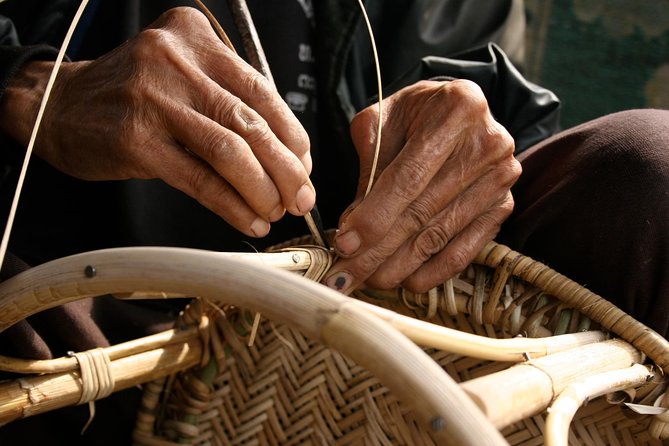
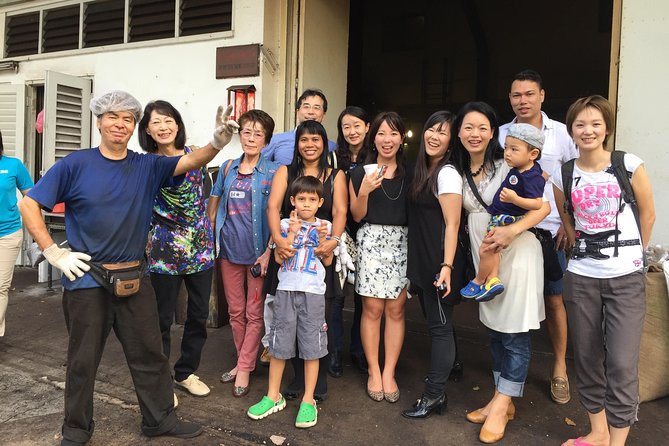
Singapore’s everyday traditions are the heart of this morning: handmade Sachima and fermented biscuits, kopi roasted the local way, paper houses for ancestral offerings, and bread made by old methods. These are working trades, not museum displays, so you get a closer look at how food and ritual fit into local life.
I like that the route pairs tasting with observation: coffee and bread give you a literal flavor of the morning, while the paper craft explains a less familiar custom. I also like the private format, which gives your group the guide’s full attention and makes it easier to ask questions as you go.
The trade-off is that this is a short, stop-to-stop tour rather than a slow neighborhood walk. You’ll cover several parts of Singapore in about four hours, so expect a mix of van rides and visits, not long stretches to explore each area on your own.
- Chinatown’s handmade snacks: See how Sachima and fermented biscuits connect food traditions with small-scale production.
- Bedok kopi roasting: Learn about local roasting methods and sample kopi ‘O’, or black coffee.
- An Ang Mo Kio paper craft house: Hear from a paper-house maker about offerings burned to honor ancestors.
- Old-style bread making: Watch how bread was made before modern shortcuts became the norm.
- Private transport and guiding: Travel between stops in a small, air-conditioned bus, with time for your group’s questions.
- A morning start: Meet at 9 am at 69 Pagoda Street, then return there at the end.
Four Singapore trades, one morning
This private tour takes a side road away from Singapore’s better-known sights. Instead of spending the morning among grand buildings or shopping streets, you meet people who keep older food and craft practices alive. The theme is disappearing trades, but the appeal is very present-tense: you see work being done, learn why it matters, and sample some of the results.
The route runs from Chinatown to Bedok, Ang Mo Kio, and Paya Lebar Road Park. That spread is one reason the tour uses a van. A previous account describes a small air-conditioned bus and a combination of walking and riding, a practical setup for a morning with several stops across town.
The tour costs $112 per person and lasts about four hours. For a private outing, that price buys more than transport: you have a guide focused on your group, access to trades that can be hard to find independently, and tastings of kopi and bread. It’s a better value if you’re curious about foodways and local customs than if you mainly want a general overview of Singapore.
Chinatown’s Sachima and fermented biscuits
The first stop is Chinatown, where you visit two traditional trades: makers of Sachima and fermented biscuits. Sachima is described as a granola-bar-type handmade Asian snack, a useful comparison if the name is new to you. The stop lasts about 45 minutes, giving you a compact introduction to both products and the work behind them.
This is a good opening because food is an easy way into a place’s daily culture. You can watch how familiar-looking snacks are made in a traditional setting, then ask questions that might not occur to you while browsing a shop. The visit is not framed as a cooking class, so come expecting to observe and learn rather than to make the food yourself.
Chinatown also gives you an early chance to get your bearings. The route begins at 69 Pagoda Street, and the tour returns to that meeting point at the end. A previous participant found the Chinatown passage useful for navigating the area later, so pay attention to the streets and landmarks around the first stop if you plan to come back independently.
The itinerary does not promise samples at this stop. The confirmed tastings are kopi ‘O’ and freshly made bread later in the morning. If snack sampling is important to you, ask the operator what is included before booking rather than assuming that every food visit comes with a taste.
Other things people book around Singapore:
- Lion City Bike Tour of Singapore
★ 5.0 · 6,211 reviews - Singapore: Gardens by the Bay Bundle Entry Ticket
★ 4.3 · 3,726 reviews - Singapore: Big Bus Hop-On Hop-Off Tour by Open-Top Bus
★ 4.5 · 3,261 reviews
Bedok’s kopi roasting and a cup of kopi ‘O’
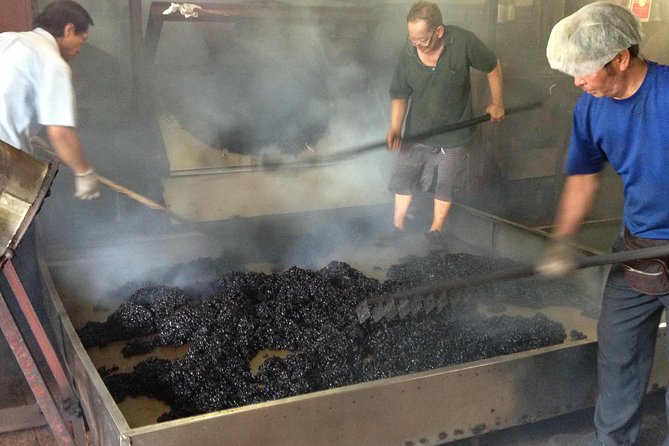
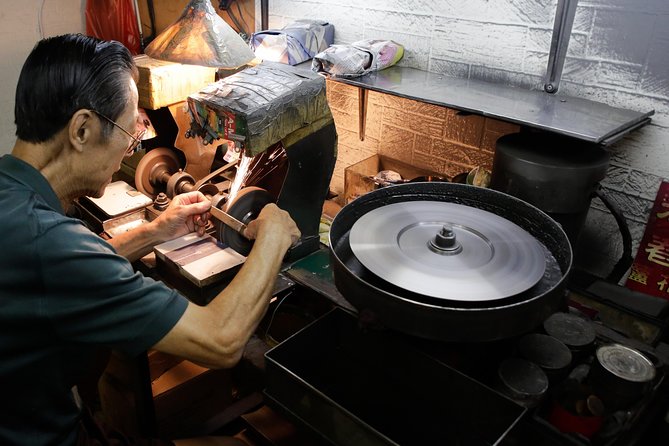
At Bedok, you visit a coffee-roasting factory for about 30 minutes. The focus is the local kopi industry: its origins, roasting techniques, and the small practical tricks that shape the finished cup. You’ll sample kopi ‘O’, meaning black coffee, making this the clearest chance to taste one of Singapore’s familiar everyday drinks during the tour.
This stop offers more than a quick caffeine break. Coffee is a daily ritual, and the roasting process helps explain how a local cup differs from a standard café order. Your guide can connect the production details with the drink in front of you, a useful bridge between craft and habit.
Thirty minutes is brief, so this is an introduction rather than a long workshop. If you have a particular interest in roasting, use the private format to ask focused questions while you’re there. The small-group setting is one of the tour’s strongest practical advantages: you are not competing with a large group for the guide’s attention.
The sample is specifically described as kopi ‘O’ or black coffee. If you prefer milk or sugar, the tour information does not say whether other versions are available. Treat the tasting as a chance to try the style offered, not a custom café order.
An Ang Mo Kio paper house and ancestor offerings
The paper craft house in Ang Mo Kio is the tour’s most distinctive stop. For about 45 minutes, you hear from a master maker who explains how Chinese families use paper objects as offerings to ancestors. These objects are burned as a way of showing respect and sending offerings to the afterlife.
This is a custom that can be difficult to understand from the outside. The maker’s first-hand explanation gives context to both the craft and the belief behind it. You are not simply looking at paper goods; you are learning why people make them and what they represent in a family ritual.
This stop was singled out as a highlight by a past participant, and it’s easy to see why it could leave a strong impression. It brings together skilled handwork, spiritual practice, and family remembrance in one visit. For a visitor who wants to understand more than Singapore’s polished public face, that kind of direct explanation is valuable.
Approach the subject with curiosity and respect. The purpose is to learn about a living custom, not to treat it as a novelty. The tour’s private format can help here, since you can ask sincere questions at your own pace without feeling you are holding up a large group.
Paya Lebar Road Park and old-fashioned bread
The final listed visit is at Paya Lebar Road Park, where you learn how bread was made the old-fashioned way. This stop lasts about 45 minutes and includes admission. Freshly made bread is part of the morning’s food focus, and the tour overview describes it as a sample.
The bakery visit rounds out the route neatly. You begin with handmade snacks, move to coffee roasting, then finish with bread, a familiar staple whose production can still tell a story about changing tools and working habits. Watching a traditional method can make the food you eat every day feel less ordinary.
The information does not specify which bread is made, what ingredients are used, or whether you’ll take part in the process. Expect to learn and observe, with a taste of fresh bread, rather than to arrive for a hands-on baking lesson. If you have dietary restrictions, check with the operator before booking because no special provisions are stated.
Same island, a different kind of day:
- Singapore: Lion City Highlights Bike Tour
★ 4.9 · 2,010 reviews - Small Group: Michelin and Local Hawker Food Tour with 9 tastings
★ 5.0 · 1,890 reviews - Morning at the Zoo with 1-way Transfer (Free & Easy)
★ 4.0 · 1,882 reviews - Experience Singapore: Cultural Cooking Class
★ 5.0 · 1,514 reviews
What the private format and price are worth
At $112 per person, this is not the cheapest way to spend a morning, but the price needs to be weighed against what the tour offers. You get a private guide, transport between four locations, access to working trades, and two named tastings. Trying to find several small producers independently could take time, and you might not get the same explanations or access.
The private arrangement matters most if you enjoy asking questions. You are the only group on the activity, so the guide’s attention is yours rather than shared with strangers. One guide associated with the tour is Stefan, who has been described as able to handle a wide range of questions. That does not guarantee he will lead your departure, so ask who your guide will be if having him matters to you.
The tour is recommended by 98 percent of its 126 ratings and has a 4.7 average score. Those figures suggest a consistently well-liked outing, though they cannot tell you whether the pace or subject matter suits your interests. The most praised elements are the unusual access, the guide’s ability to answer questions, the comfortable air-conditioned van, and the paper craft visit.
The average booking lead time is 63 days. That’s a useful sign to plan ahead if you have fixed dates, though it does not mean you must book exactly two months out. The activity uses a mobile ticket, starts at 9 am, and finishes back at the Chinatown meeting point.
Pace, practical details, and who will enjoy it
Allow roughly four hours from the 9 am start. The stops themselves add up to about two hours and 45 minutes, with the remaining time used for moving between locations and the overall flow of the tour. Since it combines walking and van travel, wear comfortable shoes and be ready to get in and out between visits.
The route suits curious eaters, craft-minded visitors, and anyone who has already seen the headline sights and wants a more grounded look at Singapore. It also works well for people who like to learn through conversation. Families and mixed-interest groups may find the variety helpful, though the tour’s appeal depends on being interested in how things are made and why customs continue.
It is less suited to someone seeking a leisurely food crawl, a broad historical tour, or a long visit in one neighborhood. The schedule covers a lot of ground, and the individual stops are short. You’ll get snapshots of several trades, not a full-day apprenticeship in any one of them.
Most people can participate, according to the activity details, but no specific accessibility arrangements are listed. If mobility, stairs, or walking distances are a concern, contact the operator before booking. The tour requires good weather and a minimum number of travelers; if weather or minimum numbers lead to cancellation, you’ll be offered another date or experience, or a refund. You can cancel for a full refund up to 24 hours before the start.
Should you book Disappearing Trades?
Book this tour if you value direct access to small traditional businesses and want a morning that links food with local customs. The combination of kopi, bread, handmade snacks, and ancestor offerings gives the tour more range than a standard tasting outing, while private guiding makes questions part of the experience.
Skip it if you prefer to set your own pace, spend hours in one district, or focus on major landmarks. The strongest reason to go is the opportunity to hear from people who still practice these trades, especially the paper-house maker. If that kind of everyday cultural detail interests you, $112 is a reasonable price for a private, well-connected morning.
FAQ
Where does the tour start and end?
It starts at 69 Pagoda Street in Singapore and ends back at the same meeting point.
What time does the tour begin?
The start time is 9 am.
How long does the experience last?
It lasts approximately four hours.
Is the tour private?
Yes. Only your group participates.
What food and drink are sampled?
The tour includes a sample of kopi ‘O’, or black coffee, and freshly made bread.
Can I cancel for a full refund?
Yes, if you cancel at least 24 hours before the experience’s start time.
Just added around Singapore
- Singapore Changi Airport Arrival Transfer★ 5.0 · 13 reviews
- Singapore Changi Airport (SIN) to Singapore – Arrival Private Transfer★ 5.0 · 6 reviews
- Singapore City Bike Tour★ 5.0 · 14 reviews
- Singapore Airport: Shared Arrival or Departure Car Transfer★ 3.5 · 3 reviews
- Singapore Private & Personalized Half-Day Tour with a Local Guide★ 5.0 · 18 reviews
- Skip the Line: Singapore Cable Car Sky Pass (Round-Trip)★ 4.0 · 11 reviews
- Secrets of Singapore Kick Scooter Tour with Dinner★ 5.0 · 11 reviews
- Private Customized Walking Tour with English Tour Guide★ 5.0 · 5 reviews
Tours in Singapore, compared.
Small Group: Michelin and Local Hawker Food Tour with 9 tastings
Read our review →
Morning at the Zoo with 1-way Transfer (Free & Easy)
Read our review →