Review · TOURS IN SINGAPORE
CityWalk With A Local
Singapore’s story is written into its streets: a market’s changing role, a temple beside other faiths, and a river that went from working waterway to polished city landmark. This walk links those places with Jimmy Loh, a Singapore-born licensed guide, and makes the city’s past part of what you see around you.
I like two things in particular: the route covers several distinct parts of town, and the small group cap of 10 leaves room for questions. The tour also promises local context on everyday subjects such as food, livelihoods and religious customs, not just a parade of grand buildings.
One consideration: three hours on foot is a substantial morning, and private transport is not included. The pace and exact walking distance aren’t specified, so plan for a walking tour rather than a ride between sights.
The quick take
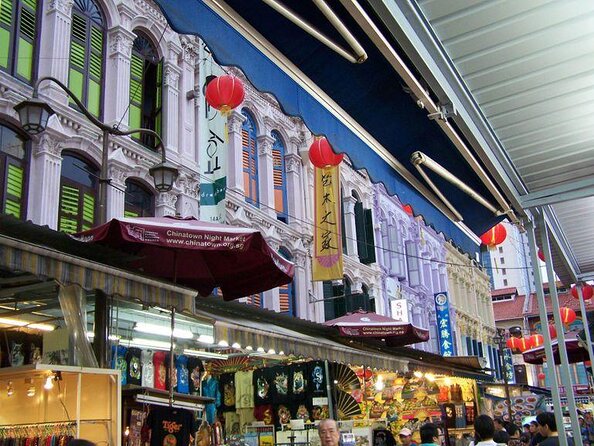
- Start at Chinatown’s market and food centre: The walk opens with daily life, early livelihoods, changing building uses and street art.
- Pause at Thian Hock Keng Temple: Jimmy explains architecture, the temple’s special features and respectful conduct inside.
- Follow the city’s changing fortunes: The route connects the Singapore River’s past and cleanup with the Colonial District and independence.
- Finish at Marina Bay: Learn how land reclamation formed the bay, then end beside the Merlion at Merlion Park.
- Keep the group small: A maximum of 10 people can make it easier to ask questions and stay engaged with the guide.
- Know the basics: The tour takes about three hours, starts at 9:30 a.m., costs $48.42 per person and includes bottled water.
Chinatown begins with everyday Singapore
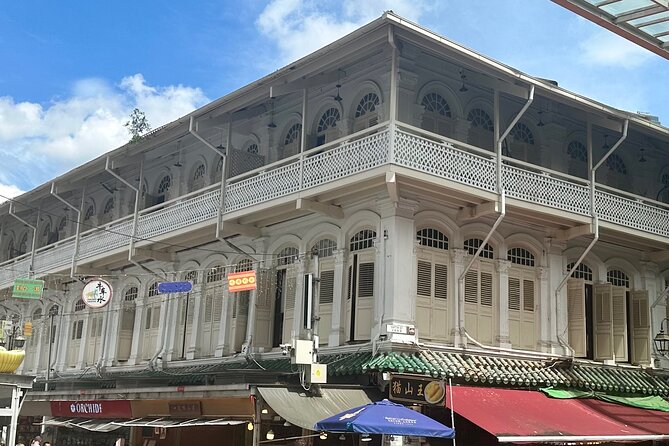
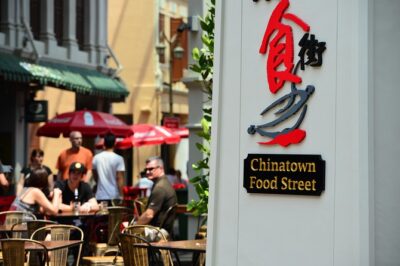
Meet at Nanyang Old Coffee, 268 South Bridge Road, for a 9:30 a.m. start. Chinatown Street Market is the first stop, with about 40 minutes set aside for its market and food-centre setting, the changing use of buildings, cultural and religious practices, early livelihoods, murals and street art.
That mix is useful. A market is more than a photogenic backdrop: it gives Jimmy a way to talk about how people made a living and how the neighborhood has changed. The food-centre focus also brings the tour down to street level, where the city’s story includes ordinary routines as well as official milestones.
You won’t need to arrive with a long list of history questions. Jimmy’s approach, as described by the tour, is to explain facts and less commonly told information in a clear, approachable way. The small-group limit helps here: if you want to ask about a mural, a building or a custom, this is a format in which a conversation is more plausible than in a large coach group.
The stop is only 40 minutes, so it is an introduction rather than an unhurried food crawl. No meal or tasting is included in the stated price. If Chinatown’s food culture is a priority, treat this visit as a useful orientation and save time later to return on your own.
Other things people book around Singapore:
- Lion City Bike Tour of Singapore
★ 5.0 · 6,211 reviews - Singapore: Gardens by the Bay Bundle Entry Ticket
★ 4.3 · 3,726 reviews - Singapore: Big Bus Hop-On Hop-Off Tour by Open-Top Bus
★ 4.5 · 3,261 reviews
Thian Hock Keng, architecture and respectful visits
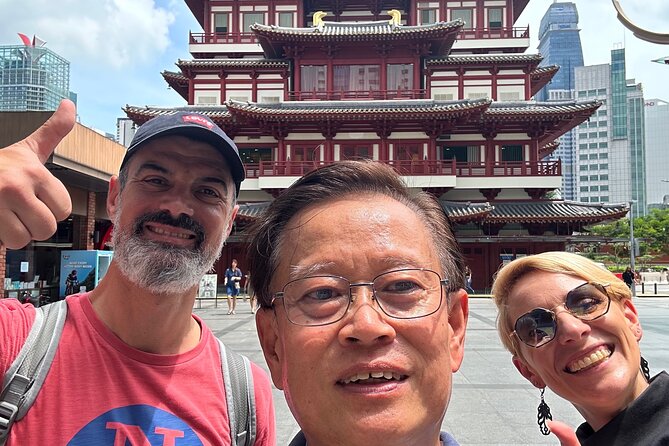
The next stop is the Thian Hock Keng Temple Mural, with around 20 minutes for the temple walk. The focus is on the building’s architecture, distinctive features, its place within a multi-religious setting, and the dos and don’ts of visiting a temple.
This is one of the tour’s most practical moments. Religious sites can be easy to admire from the outside and harder to read from within. Clear guidance on respectful behavior helps you pay attention without worrying that you have missed an important custom.
The stop is brief, so expect a focused introduction, not an extended study of every detail. Its value lies in pairing the building with context: what to notice, how the site works as a place of worship, and how it fits into Singapore’s wider mix of faiths.
The itinerary names a temple mural as the stop, then describes a temple walk. It does not specify which interior areas are entered or whether access can vary, so keep expectations flexible. The guide’s explanation remains useful even if your visit centers on the exterior and the surrounding site.
Downtown Core, where planning shapes the skyline
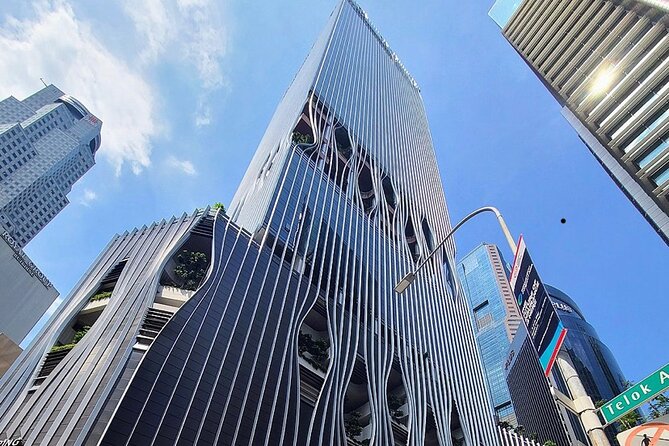
The walk then reaches the Downtown Core, Singapore’s central business district. About 30 minutes are devoted to architecture, building shapes and height limits, greenery requirements, types of business and less obvious places in the area.
This is a good point to shift from older neighborhood life to the city’s modern planning. Instead of treating tall buildings as a jumble of glass and concrete, Jimmy can explain the rules and choices that shape them. The greenery requirement is a particularly helpful subject: it gives you a way to look at the district beyond counting towers.
The stop also promises a look at business types and tucked-away places. That can help you understand the area as more than a cluster of offices. Still, this is a short segment, and the tour does not name specific businesses or sites along the way. Think of it as a guided reading of the district rather than a detailed architectural tour.
The Singapore River, from livelihood to cleanup
At the Singapore River, the group spends about 30 minutes on the waterway’s importance, early livelihoods and working conditions, a major cleanup, and the river’s shift alongside changing business activity.
The river helps connect the city’s past and present in a direct way. The tour’s emphasis is not only on what the waterfront looks like now, but on the work and conditions that shaped it before its transformation. That contrast gives the polished riverfront a story, rather than leaving it as a pleasant view with no context.
The cleanup is another valuable thread. It lets Jimmy explain how the river changed as the city changed, and how business activity along the water evolved. The tour does not promise a boat ride, and none is included in the listed features; this is a walking stop with interpretation.
I like that the route gives the river its own time rather than treating it as a quick photo pause. Half an hour is enough to establish its importance and ask questions, though not enough to cover every chapter of its history.
Same island, a different kind of day:
- Singapore: Lion City Highlights Bike Tour
★ 4.9 · 2,010 reviews - Small Group: Michelin and Local Hawker Food Tour with 9 tastings
★ 5.0 · 1,890 reviews - Morning at the Zoo with 1-way Transfer (Free & Easy)
★ 4.0 · 1,882 reviews - Experience Singapore: Cultural Cooking Class
★ 5.0 · 1,514 reviews
The Colonial and Civic District, from Temasek to independence
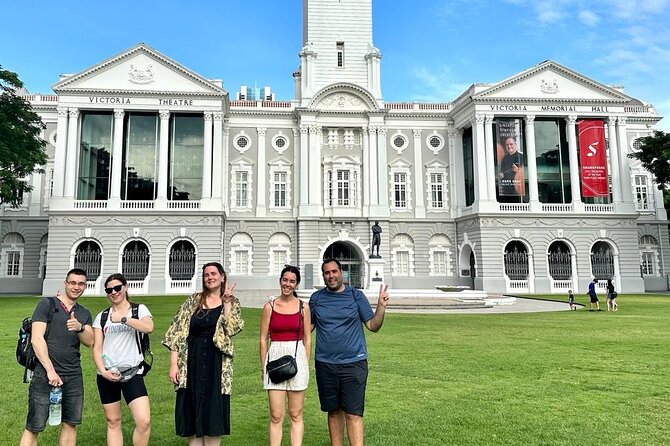
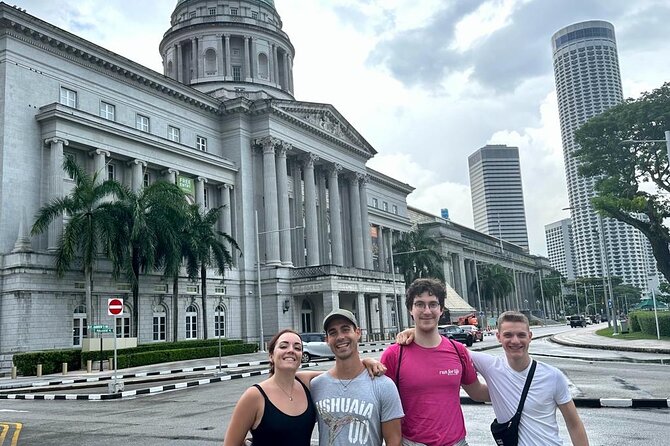
Next comes the Colonial District, also called the Civic District, for about 30 minutes. Topics range from Temasek and the names Temasek, Singapura and Singapore to colonial buildings, independence and the country’s shift toward first-world conditions.
This is the route’s broadest historical stretch. The sequence gives you a framework for understanding how Singapore’s identity and built environment changed over time. The focus on colonial buildings then and now adds a visible layer to that story: you can compare the role of older structures with their place in the city today.
The tour also addresses independence, a key turning point in the country’s development. Its value is in tying that change to the streets and buildings around you, rather than presenting political history as a list of dates. Jimmy is described as able to field questions beyond a set script, which matters most in a section like this, where one topic can naturally lead to another.
The stop is necessarily selective. Thirty minutes cannot explain every detail of Singapore’s past, and this is a city overview, not a specialist history seminar. But if you want a clear outline before exploring museums or neighborhoods independently, this is a strong use of the time.
Marina Bay and the Merlion finish
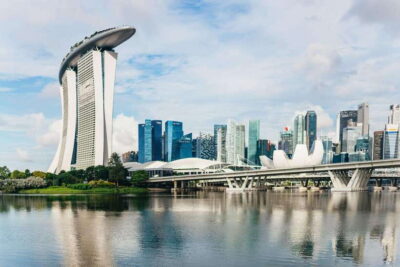
The final stop is Marina Bay, with about 30 minutes to cover land reclamation, the bay’s formation, phases of growth and notable features, including the Merlion. The tour ends at Merlion Park, beside the Merlion sculpture at 1 Fullerton Road.
The bay is a fitting end because it brings the tour’s themes together: planning, growth and the reshaping of the city. Land reclamation is central to the explanation, giving you context for why the bay exists in its present form and how its development unfolded in phases.
The Merlion is an obvious landmark, but the stop is not limited to a photo. Its place in a broader account of Marina Bay gives the final half-hour some substance. You finish with a sense of how the city’s modern waterfront relates to the older districts you have just crossed.
The end point is useful for continuing your day, but the tour does not include private transport. You are responsible for getting to the start and moving on from Merlion Park. The supplied details say the tour is near public transportation, though they do not name a particular station or route.
What makes the price worthwhile
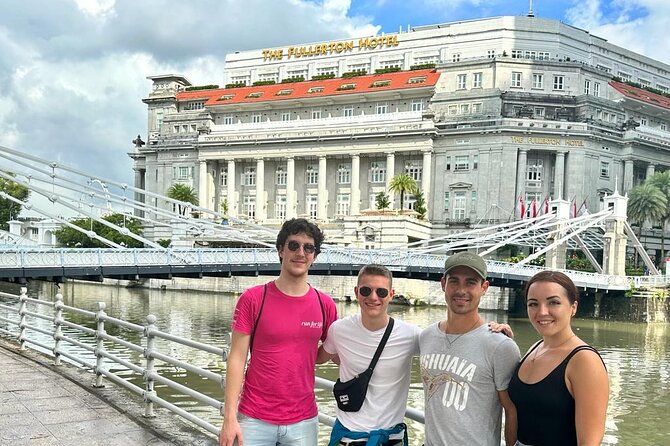
At $48.42 per person, the value rests mainly on the guide and the breadth of the route. You get about three hours across Chinatown, the temple area, the business district, the riverfront, the Civic District and Marina Bay. Bottled water is included, while private transport is not.
The group size matters to that calculation. With no more than 10 participants, Jimmy can give closer attention than a large tour usually allows. That is useful in a walk built around explanations and questions, and the strongest praise for this experience centers on his ability to make Singapore’s history easy to follow, answer questions naturally and share practical tips for the rest of a stay.
The tour has a 4.8 rating from 20 ratings, with 95 percent recommending it. Those figures point to a consistently positive response, but the small total means they are best treated as an encouraging signal rather than a guarantee that every person will find the pace or subject matter ideal.
There is no food tasting or private ride in the stated inclusions. If you mainly want transport between landmarks or a long meal stop, this is not that kind of outing. If you want a guided introduction that connects neighborhoods and gives you useful local context, the price is easier to justify.
Who should book this walk
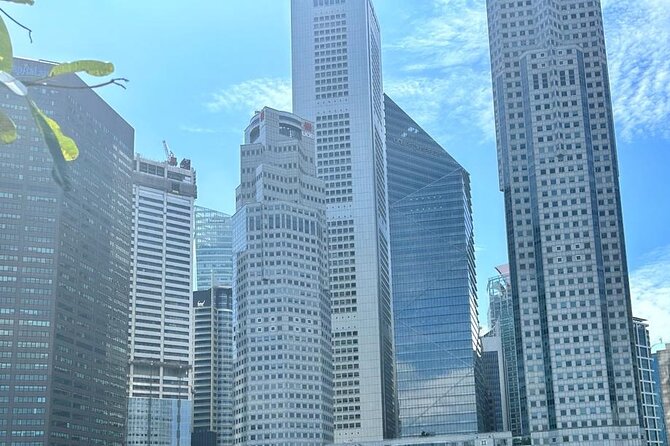
I’d choose this tour early in a Singapore stay if you want a broad orientation before exploring the city on your own. Jimmy’s local background and the route’s range suit people who enjoy asking questions and want more than a quick list of landmarks. The emphasis on food-centre culture, religious practices and everyday livelihoods also offers a useful counterweight to a sightseeing day focused only on major buildings.
It can work well for visitors with varied interests because the walk moves through social, religious, commercial and civic history. The stated maximum group size is 10, and most people can participate, though no specific accessibility details or walking distance are provided. If you have mobility concerns, check those details with the provider before booking.
You may prefer another option if you want a private tour, extensive time at each stop, food included or transportation between districts. The schedule gives each place a defined window, generally 20 to 40 minutes. That makes the experience a compact city overview, not a slow, single-neighborhood exploration.
The tour has a minimum number of participants and requires good weather. If it cannot run because of weather or the minimum is not met, you’ll be offered another date or experience, or a refund. You can cancel for a full refund up to 24 hours before the start time.
Should you book CityWalk With A Local?
Book it if you want to understand how Singapore’s older neighborhoods, river, civic center and modern bay fit into one story, and if a guide-led walk sounds more useful than moving between landmarks alone. Jimmy’s friendly, question-ready style is the main draw, while the small group and varied subject matter make the three hours feel well spent.
Skip it if you need a ride-based tour, a private guide or long visits at each stop. For an early-trip introduction with practical local insight, this is a strong choice at a reasonable price.
FAQ
How long does the tour last?
It lasts about three hours. The six stops account for roughly 180 minutes in total.
What time does the tour start?
The start time is 9:30 a.m.
Where does the tour begin?
It begins at Nanyang Old Coffee, 268 South Bridge Road, Singapore 058817.
Where does the tour end?
It ends at Merlion Park, 1 Fullerton Road, Singapore 049213, beside the Merlion sculpture.
How much does the tour cost?
The listed price is $48.42 per person.
Is the tour led by a local guide?
Yes. The guide is Jimmy Loh, who is Singapore-born and a licensed Tourist Guide.
How large is the group?
The tour has a maximum of 10 participants.
Is bottled water included?
Yes, bottled water is included. Private transportation is not included.
Can I cancel for a refund?
You can cancel up to 24 hours before the start time for a full refund. Cancellations made less than 24 hours before the start time are not refunded.
Just added around Singapore
- Singapore Changi Airport Arrival Transfer★ 5.0 · 13 reviews
- Singapore Changi Airport (SIN) to Singapore – Arrival Private Transfer★ 5.0 · 6 reviews
- Singapore City Bike Tour★ 5.0 · 14 reviews
- Singapore Airport: Shared Arrival or Departure Car Transfer★ 3.5 · 3 reviews
- Singapore Private & Personalized Half-Day Tour with a Local Guide★ 5.0 · 18 reviews
- Skip the Line: Singapore Cable Car Sky Pass (Round-Trip)★ 4.0 · 11 reviews
- Secrets of Singapore Kick Scooter Tour with Dinner★ 5.0 · 11 reviews
- Private Customized Walking Tour with English Tour Guide★ 5.0 · 5 reviews
Tours in Singapore, compared.
Small Group: Michelin and Local Hawker Food Tour with 9 tastings
Read our review →
Morning at the Zoo with 1-way Transfer (Free & Easy)
Read our review →